

Harlene Rosen became a teenage bride in 1956 when she married Woody Allen, then an unknown comedy writer. The marriage lasted only a few years, but what followed turned Rosen into an unwilling figure in one of the stranger legal disputes of 1960s show business. Rosen then withdrew almost entirely from public life for more than half a century.
Quick Facts
| Field | Details |
|---|---|
| Full Name | Harlene Susan Rosen |
| Best Known As | First wife of comedian and filmmaker Woody Allen |
| Wedding Date | March 15, 1956 |
| Wedding Location | Los Angeles, California |
| Reported Age at Marriage | 16 or 17 (sources differ) |
| Marital Separation | 1959 |
| Divorce Finalized | November 1962 |
| Children | None |
| Legal Action Taken | 1967 defamation lawsuit against Woody Allen and NBC |
| Case Outcome | Settled privately out of court in 1970 |
| Background | Trained pianist |
| Public Life Since 1962 | Has lived an almost entirely private life |
Who Is Harlene Rosen?
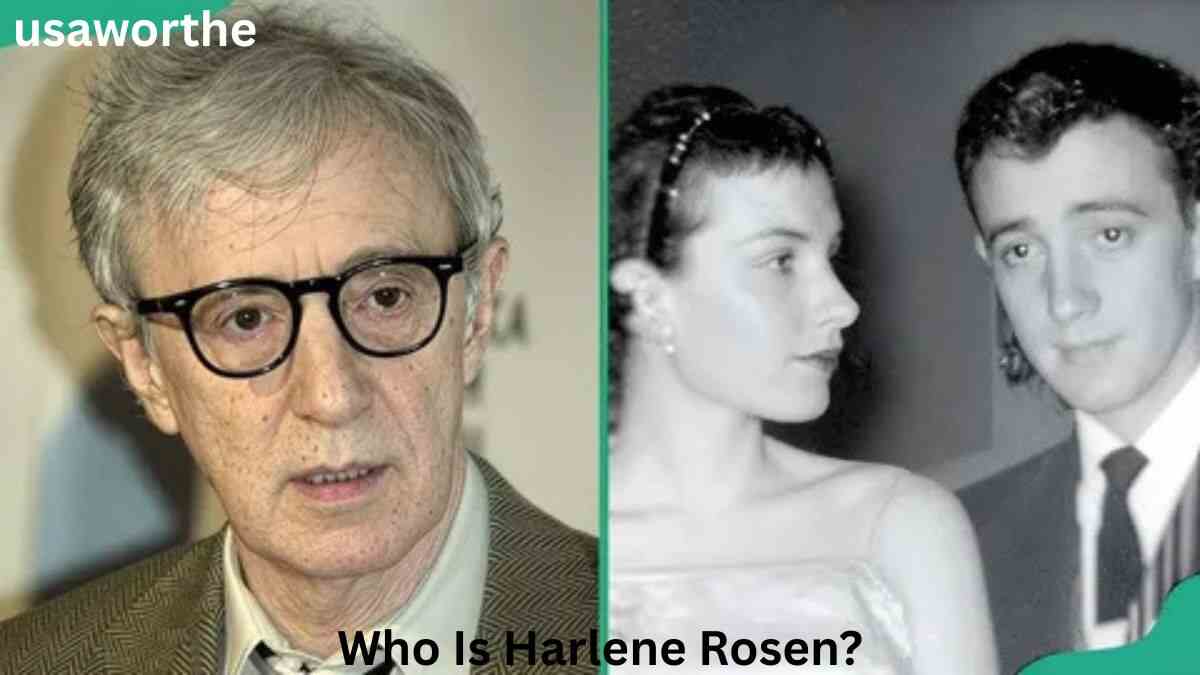
Outside her marriage, Harlene Rosen has essentially no public footprint. She has never given an interview about her relationship with Woody Allen, never pursued a media career, and has spent more than sixty years actively avoiding public attention — an unusual choice for someone permanently tied to one of America’s most talked-about entertainers.
Almost everything known about her early life comes secondhand: from Allen’s own comedy routines at the time, from biographers who later wrote about his career, and from court filings tied to the lawsuit she eventually brought against him. She is consistently described as a serious, trained pianist, though details about her life beyond the marriage remain scarce, largely because she has deliberately kept them that way.
Timeline of Key Events
| Year | Event |
|---|---|
| 1956 | Marries Woody Allen in Los Angeles, reportedly at age 16 or 17 |
| 1959 | The couple separates after roughly three years of marriage |
| 1960 | Allen launches his stand-up career, beginning material referencing his marriage |
| 1962 | Their divorce is legally finalized |
| 1964–1968 | Allen releases three live comedy albums, some featuring jokes referencing Rosen |
| 1967 | Rosen files a $1 million defamation lawsuit against Woody Allen and NBC |
| 1970 | The lawsuit is settled out of court under undisclosed terms |
| 2015 | Rosen sends a private note to a biographer for inclusion in a book marking Allen’s 80th birthday |
The Marriage and Its Quiet Collapse
Rosen and Allen were married in a rabbi-officiated ceremony in Los Angeles in March 1956. Accounts of their ages at the time differ slightly, with Rosen generally placed at 16 or 17 and Allen at 19 or 20 — young even by the era’s norms. Some later retellings suggest the marriage was driven more by Allen’s push than by mutual eagerness.
At the time, Allen was not yet a performer at all — he was working behind the scenes as a comedy writer, still years away from stepping in front of an audience himself. The marriage unfolded during that unsettled period, and the couple separated after roughly three years, worn down by the ordinary pressures young marriages face. Their divorce did not become official until late 1962. As part of the settlement, Allen was required to pay weekly alimony that increased once he found steady work — a term that looked increasingly lopsided as his own income grew substantially in the years that followed. The couple never had children.
Allen’s Rising Career and the Timing Behind It
To understand how Rosen ended up as recurring material in a national comedian’s act, it helps to look at how quickly Allen’s career took off right after their split. During the 1950s, he focused solely on writing, crafting jokes for prominent television entertainers of the era while remaining offstage himself.
Encouraged by his manager, Allen made his first stand-up appearance at a Manhattan nightclub in October 1960 — just about a year after separating from Rosen. Progress was slow at first, but his profile expanded steadily over the next several years through appearances on major late-night programs, eventually turning him into one of the most frequently booked young comedians on national television by the mid-1960s. Between 1964 and 1968, he released three live comedy albums built heavily around self-deprecating, autobiographical material, including jokes drawn directly from his first marriage.
That timeline matters: it means the material referencing Rosen didn’t stay contained to small comedy clubs. It grew alongside Allen’s own fame, reaching larger and larger audiences each year until it was airing on national television by the time she finally decided to take legal action.
Comedy Career vs. Personal Fallout
| Aspect | Woody Allen (Public Trajectory) | Harlene Rosen (Private Trajectory) |
|---|---|---|
| 1959–1960 | Transitions from writer to performer | Recently separated, with no public role |
| 1962–1963 | Breaks into national television | Finalizes the divorce quietly |
| 1964–1968 | Releases three major comedy albums | Becomes a recurring subject of his comedy material |
| 1967 | Faces a defamation lawsuit | Files a lawsuit seeking $1 million in damages |
| 1970 onward | Career continues expanding into film | Withdraws almost entirely from public view |
The Jokes That Led to a Lawsuit
As Allen’s stand-up career advanced, he began to include content about Rosen in his acts, often using a disparaging nickname that he frequently employed both during performances and in broadcasts. The material reportedly went further than typical ex-spouse jokes: after Rosen was the victim of a sexual assault near her home, Allen referenced the incident in a crude joke during a televised appearance, repeating a version of it on a national broadcast to audience laughter.
By 1967, Rosen decided to respond formally. She filed a defamation lawsuit against both Allen and the network that aired his material, seeking $1 million in damages and arguing that the repeated public mockery had damaged her reputation and caused real emotional harm. A judge granted a temporary order barring Allen from making further on-air jokes about her — a notably rare outcome, since courts have historically been cautious about restricting comedic speech, even when it targets an identifiable private individual. The case was quietly settled out of court in 1970, with the terms never disclosed publicly.
Verified vs. Estimated Claims
| Claim | Status |
|---|---|
| Married Woody Allen in March 1956 | Verified |
| Age 16 or 17 at the time of marriage | Widely reported; exact age unconfirmed |
| Divorce finalized in November 1962 | Verified |
| Filed a defamation lawsuit in 1967 | Verified |
| Lawsuit settled in 1970 | Verified |
| Never remarried | Widely reported, but not independently confirmed |
| Remarried in the 1960s | Unverified and contradicted by most credible sources |
| Continued playing piano privately | Reported, but unconfirmed |
Why People Are Trending on Her Story

Interest in Rosen’s story tends to resurface whenever public attention turns back to Woody Allen’s life, which has been examined and re-examined across decades of biographies, documentaries, and controversy. Her first marriage remains a notable part of that story because it led to a rare situation in which a private individual challenged a rising celebrity over the use of personal experiences—and secured a limited but meaningful legal victory.
Her decision to stay silent for more than sixty years, breaking that silence exactly once and entirely on her own terms, has also made her an unusual figure in celebrity history: someone drawn briefly into fame against her will, who pushed back through the courts, and then deliberately chose never to capitalize on the attention that followed.
Interesting Facts
- Rosen’s 1967 lawsuit resulted in one of the few court orders in American legal history explicitly restricting a comedian’s on-air jokes about a private individual.
- The three-year gap between her separation from Allen and his stand-up debut means the material that led to her lawsuit developed entirely after their relationship had already ended.
- Despite the lawsuit and settlement, Rosen has never publicly discussed the case itself in any known interview or statement.
- Her only known public comment on the marriage came more than fifty years later, through a brief note sent privately to a biographer rather than through any public appearance.
Read Related Post: Deborah Roberts Net Worth 2026
Conclusion
Harlene Rosen remains one of the least publicized figures connected to Woody Allen’s life. Although her marriage to the filmmaker lasted only a few years, it became a notable chapter in his early career, particularly after Allen publicly referenced their relationship in his stand-up routines. Unlike many people associated with Hollywood, Rosen chose a life away from the spotlight and has never sought public attention or media recognition.
Much of what is written about Harlene Rosen today comes from historical accounts of her marriage and its aftermath rather than from her own public statements. As a result, separating verified facts from long-repeated anecdotes is essential when examining her story. Her decision to maintain privacy has left many questions unanswered, but it has also ensured that her life has remained largely her own.
Ultimately, Harlene Rosen’s story is less about celebrity and more about understanding an often-overlooked part of Woody Allen’s early life. While public curiosity continues decades after their divorce, her legacy is defined not by fame but by the quiet path she chose outside the entertainment industry.
Frequently Asked Questions
Who was Harlene Rosen?
Harlene Rosen was Woody Allen’s first wife. They were married from 1956 to 1962.
How old was Harlene Rosen when she married Woody Allen?
Reports place her at either 16 or 17 at the time of their March 1956 wedding, with Allen reportedly 19 or 20.
Why did Harlene Rosen and Woody Allen divorce?
The couple separated around 1959 after roughly three years of marriage, and their divorce was legally finalized in November 1962.
Why did Harlene Rosen sue Woody Allen?
In 1967, she sued Woody Allen and NBC for $1 million, alleging defamation after he repeatedly mocked her in public, including references to her past sexual assault.
What happened with the lawsuit?
A judge issued a temporary order barring Allen from further public jokes about Rosen. The case was settled out of court in 1970, with the terms kept private.
Did Harlene Rosen and Woody Allen have children?
No, the couple had no children together.